Why San Francisco’s Fourplex Ordinance Isn’t Delivering (Yet)
When San Francisco passed the Mandelman fourplex legislation, it was seen as a step toward more equitable and abundant housing. But in the years since, the results have been… underwhelming.
- WORDS BY
- Dane Bunton
- DATE
- 04.17.2026
The ordinance was intended to support more “middle housing”-duplexes, triplexes, and fourplexes that fill the gap between single-family homes and large apartment buildings. These small-scale, multi-unit homes can fit seamlessly into existing neighborhoods, making them an especially effective way to increase housing without drastically changing neighborhood character. Middle housing has the potential to bring more affordability, walkability, and diversity of residents to areas that have long been zoned for only one type of household.
One of the most promising aspects of middle housing is that it doesn’t just rely on large-scale developers. In many cases, it opens the door for what planners call incremental developers-individual homeowners or small property owners who build an extra unit or two on their lot. We’ve seen this with the rise of ADUs across California. But while ADUs came with clear standards and state-level support, the fourplex path is still mired in uncertainty and cost. Without clearer processes and better tools, it’s hard to expect small-scale players to take on these projects-even when the zoning is technically on their side.


In theory, the ordinance opened up opportunities for homeowners and small developers to create up to four units on any lot citywide, or up to six on a corner lot. In practice, as the Chronicle reports, only 11 applications have been submitted since it passed three years ago.
“Of the 11, one was canceled, two are stalled, one received an incomplete application notice but has not reapplied, and six are under review. Just one project has received an approval letter, but it has yet to break ground because someone appealed it under the California Environmental Quality Act.“

We’re Studio BANAA, an architecture and design firm in San Francisco that has been imagining and designing creative hospitality spaces since 2015.
Contact our team to get started with your complimentary predesign and feasibility study. Get started on your business that will actually work for you, your team, and your customers.

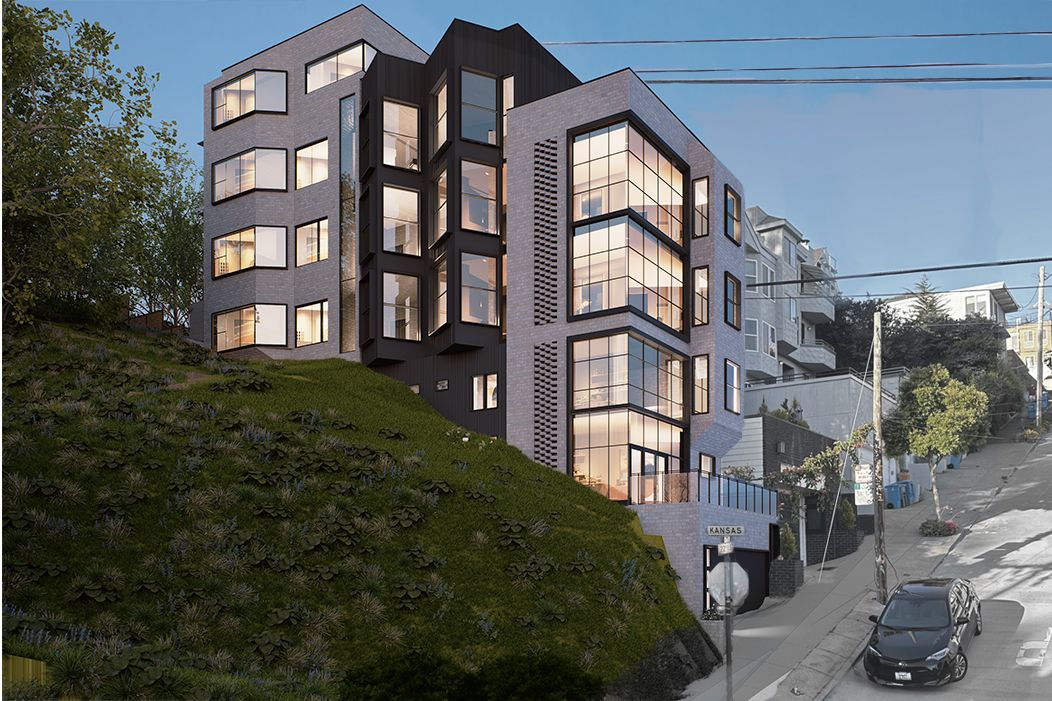
That “single project”? It happens to be our latest housing development at 22nd Street in Potrero Hill. After a brief back-and-forth with a neighbor who filed the CEQA appeal, the Board of Appeals unanimously overturned the challenge shortly after. We live to fight another day.
Our 22nd Street project is the only one that has received full approval under the ordinance, where we used the fourplex legislation to legalize five units on a corner lot zoned for three.You can read more about it here. The process was surprisingly straightforward, which makes it all the more surprising that more people aren’t taking advantage of this policy. Why aren’t more developers using it?

Even with the zoning aligned, most middle housing projects face the same burdens as large-scale developments: long permitting timelines, hefty fees, unclear approval paths, and ineligible financing. Plus, small projects can’t rely on economies of scale to make the math work.

That tracks with our experience. For middle housing to become a meaningful solution, policy isn’t enough. Cities need to support it with real tools: low-interest loans, reduced fees, and a faster, more predictable permitting process. Some cities have already figured this out:
- City of Minneapolis mandates streamlined review timelines, which has helped increase housing stock while keeping rents relatively stable.
- City of San Diego offers expedited processing and dedicated staff for infill projects with affordable units.
- City of Folsom defers development impact fees for up to 15 months.
- City of Chicago provides low-interest pre-development loans for small housing projects through its community loan fund.
Mayor Daniel Lurie has voiced strong support for new housing, including plans to upzone exclusionary neighborhoods and support office-to-residential conversions. He’s also taken early steps toward fixing the process issues that stall projects before they ever break ground.
His PermitSF initiative aims to centralize and speed up the city’s permitting system – something that could make a real difference for smaller projects like fourplexes, which currently face the same drawn-out bureaucracy as much larger developments. A more predictable, transparent permitting path could go a long way toward making middle housing feasible for incremental developers and small property owners.
He’s also championed incentives for turning underused office space into housing, offering developers long-term financial reimbursements. It’s a clear example of what happens when policy and support are aligned.
Small-scale infill deserves the same kind of attention-because if the city wants more of this housing type, zoning alone won’t get us there.
S.F. made it easier three years ago to build fourplexes. None have been built as a result.
Read the full article (paywall)
Keep in Touch?
Subscribe to our mailing list & get receive infrequent emails.